You live an exhilarating adrenaline fueled life responding to emergencies, natural disasters, protracted crises or conflict situations. You are a humanitarian worker, journalist, doctor, nurse, paramedic or member of the military, navy or air force, and you work long hours, in challenging conditions, away from your family and friends, far from home. Contexts such as these are often among the most demanding and complex in the world, and with them they bring unique challenges. Your physical and mental health can take a toll. Your relationships may suffer. You might use less than optimal coping mechanisms to get by. With little or no work-life balance you can lose sight of who you are, and what matters most to you, including your dreams, your goals, and hat excites you. It all becomes a blur as work takes over your life. You become your work.
And while this type of work is both exhilarating and deeply meaningful, mental health issues are often common place due to the fast paced and furious world that you live in. These concerns are often swept under the rug or ignored, due to a prevailing culture of silence, guilt, stigma and shame. Yet when you don’t take time out to address your mental health requirements, life can spiral out of control. I know this from personal experience having worked for years in areas with protracted conflict and responding to natural disasters, as a humanitarian aid worker. It was only when my hair started falling out in handfuls that I realised I was in trouble, yet I had no idea who or where to turn to for support. When I finally found psychological support from trauma specialists, I walked away from each session triggered and in tears as they had no experiential understanding of trauma or the world I had been living in. I felt so alone. I thought I would never heal my broken mind.
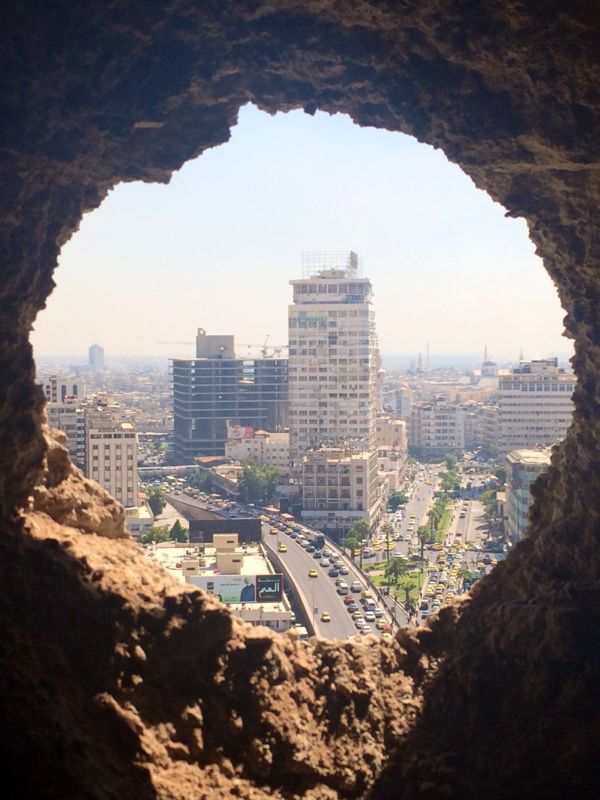
Photograph taken in Syria [2014] the morning after a run in with a rocket that destroyed my hotel room. I was trapped in the room, unable to escape, and completely unaware of what was going on around me.
Was this a complex attack or had the hotel been taken over by a Non-State Armed Group? After what seemed like an eternity of time, security teams were able to break down my door to evacuate me.
What had actually happened was rebels in a besieged area were firing rockets into Government controlled areas, and the UN, who was not a target, was unfortunate collateral.
When I took this photo the next morning, I was as high as a kite on adrenaline, and completely unaware that I needed to take time off work to recover. I thought I was absolutely fine despite my constantly activated nervous system. I was easily startled, jumpy, scared of the dark, and had insane insomnia, flashbacks and nightmares.
What was most fascinating to learn from this entire experience, was that it wasn’t about the accidents I was involved in. Rather, it was ultimately about all what I hadn’t addressed in my life that needed to be looked at. It was like peeling layers of an onion. There were so many layers of pain and wounding to be addressed. And each time a healing milestone was met another beautiful opportunity for healing presented itself. And so the dance began.
In time, I discovered a way out of the mental labyrinth I found myself in, and in doing so, picked up a range of incredible techniques to soothe my over-active nervous system and heal my mind. It definitely wasn’t a quick fix. Rather, it was a pathway of constant effort and a deep commitment to restoring my mental health. With the right tools in your back pocket, it can even be a life long journey of discovering your authentic self and real happiness.
Today I live in Byron Bay, Australia where I run my a growing trauma-informed psychotherapy practice. I offer on-line and in-person sessions, and I invite you to book a free consultation to discuss your situation and the type of support you currently require.